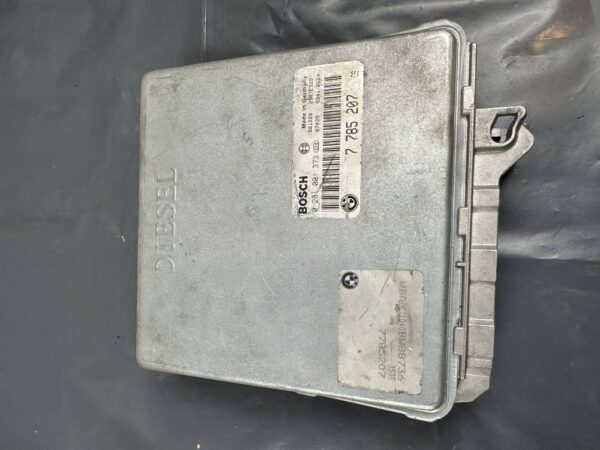
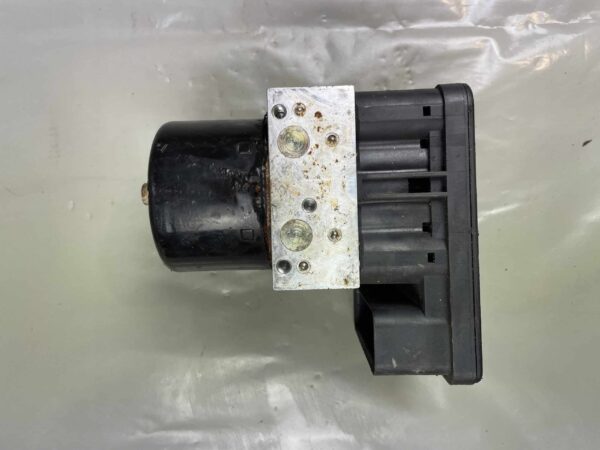
How the Mercedes W463 G-Class Transmission Control Unit Fails
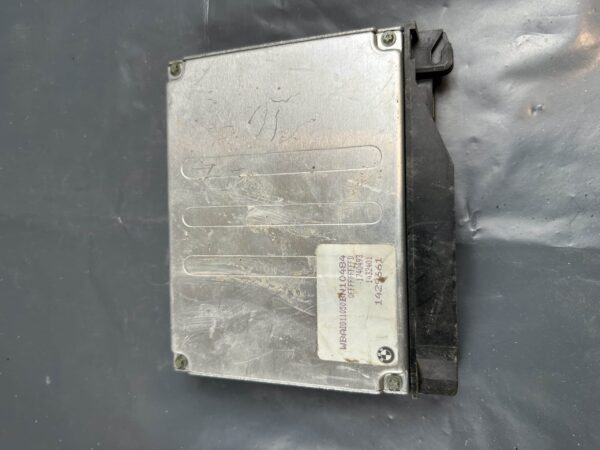
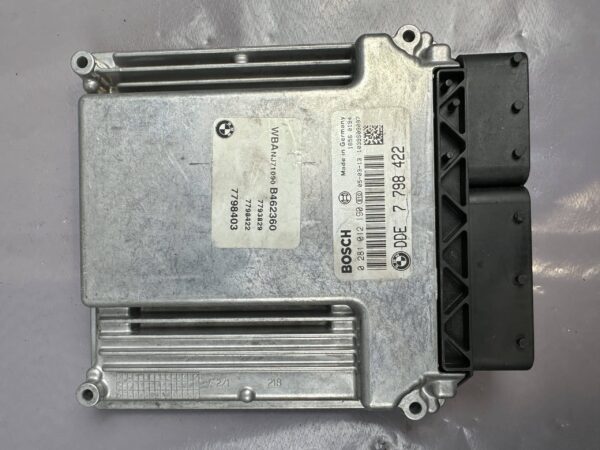
The Mercedes W463 G-Class uses an electronically managed automatic gearbox controlled by a dedicated transmission control unit — the TCU or EGS module. When this unit begins to fail, the gearbox may refuse to shift normally, default to a fixed gear, or trigger persistent fault codes that cannot be cleared by simply resetting the ECU. The G-Class platform is particularly demanding on transmission electronics because of the range of operating conditions from urban roads to off-road terrain, which creates thermal and vibration stress over time.
What the TCU Actually Controls
The transmission control unit on the W463 G-Class manages shift timing, torque converter lock-up, kickdown response, and communication with the engine management system. It receives input from the transmission output shaft sensor, selector lever position, oil temperature sensor, and engine load data via the CAN bus. Based on this information it sends hydraulic control signals through the valve body solenoids. A faulty TCU disrupts this entire process, and the symptoms often appear gradually before a complete failure occurs.
On G-Class models with the 5-speed 722.6 automatic — the most common unit fitted across the 1998–2012 production window — the TCU is paired to the specific gearbox variant and in many cases also stores vehicle-specific adaptation data. This means that a straight swap with an untested or uncoded unit can create new problems even if the hardware is otherwise compatible.
Symptoms That Indicate TCU Trouble
- Hard or late upshifts, particularly cold
- Gearbox remaining in third gear regardless of speed (limp mode)
- Torque converter shudder at highway speed
- Kickdown no longer responding to throttle
- Random false neutral between shifts
- Check Engine or Transmission warning on the instrument cluster
- Fault codes returning immediately after clearing
It is worth noting that many of these symptoms also overlap with solenoid wear or low transmission oil pressure. Proper diagnosis requires reading TCU-specific fault memory before assuming the control unit itself has failed. A workshop that simply replaces the TCU without confirming the internal solenoids are serviceable may find the symptoms return within weeks. For comparison, see What Happens When the Mercedes W211 Transmission Control Unit Fails.
Relevant Fault Codes
| Fault Code | Description |
|---|---|
| P0700 | Transmission Control System malfunction — generic CAN fault trigger |
| P0715 | Input/turbine speed sensor circuit malfunction |
| P0720 | Output speed sensor circuit fault — affects shift point calculation |
| P0730 | Incorrect gear ratio detected — often linked to solenoid or TCU internal fault |
| P0741 | Torque converter clutch circuit stuck off |
| P0750 | Shift solenoid A malfunction — can originate from TCU output driver failure |
| P1776 | Transmission control module — internal fault (Mercedes-specific) |
Code P1776 is particularly significant because it points directly to the TCU’s internal processor or memory rather than an external sensor or solenoid. When this appears alongside P0700, replacement of the TCU is usually unavoidable.
OEM Part Numbers
The correct TCU for the W463 G-Class depends on engine variant, gearbox type, and production year. The following numbers apply to common configurations with the 722.6 five-speed automatic:
- A 0225457932 — used on G320 CDI and G270 CDI variants, later production
- A 0225451632 — fitted to G500 and G55 AMG with M113 engine
- A 0275453732 — revised unit for updated 722.660 gearbox suffix
- A 0255453532 — G400 CDI variant with OM628 diesel
- A 1685452632 — early production G-Class with 722.6 first generation
Always match the full OEM number from the original unit label. Even small suffix differences can indicate different software variants or solenoid configurations that affect coding compatibility. Using the exact number avoids the need for custom adaptation procedures that many generic workshops cannot perform.
Affected Vehicles
This TCU failure pattern affects W463 G-Class vehicles produced roughly between 1998 and 2012, covering the transition from the earlier 722.6 to later updated versions of the same transmission family. Most affected are: A related diagnostic guide is What Happens When the Mercedes W124 EGS Transmission Module Fails.
- G270 CDI (2002–2006)
- G320 CDI (2006–2009)
- G400 CDI (2001–2006)
- G500 (1998–2012)
- G55 AMG (2004–2012)
Vehicles used extensively off-road tend to show TCU failures earlier due to vibration and temperature cycling. Units mounted in exposed or poorly ventilated locations accumulate heat stress more quickly than in typical passenger cars.
Replacement and Coding Considerations
Replacing the TCU on a W463 requires more than physically fitting the new unit. The replacement module must be adapted to the vehicle using Mercedes diagnostic software — XENTRY or DAS — so that it accepts the stored transmission adaptation values and recognises the vehicle’s CAN network properly. A used OEM unit sourced with the matching part number can be adapted successfully in most cases, which makes used OEM parts a practical and cost-effective alternative to expensive new units.
After fitting, the gearbox adaptation should be reset and the transmission allowed to relearn shift points over several driving cycles. Skipping this step often results in continued harsh shifting even with a fully functional replacement module.
Frequently Asked Questions
Can a W463 G-Class TCU failure cause permanent gearbox damage?
If the TCU causes the gearbox to remain locked in limp mode, long-term mechanical damage is unlikely because the gearbox simply holds a safe gear. However, if solenoid signal problems cause repeated incorrect shifting under load — particularly off-road — prolonged operation can accelerate clutch pack wear. Address TCU faults promptly rather than operating the vehicle indefinitely in a degraded state.
Does the replacement TCU need to be coded to the G-Class?
Yes. The replacement unit must be adapted to the vehicle using Mercedes diagnostic equipment. A used OEM unit with the correct part number can usually be adapted without replacing the gearbox control coding from scratch, but the adaptation procedure must be completed properly. Incorrect adaptation results in shift behaviour that does not match the vehicle’s engine and differential setup. For additional context, read Mercedes W210 E-Class Transmission Control Unit Faults Repair Guide.
What is the difference between TCU failure and solenoid failure on the 722.6?
Solenoid failures typically produce consistent, repeatable shift faults tied to specific gears or shift stages. TCU internal failure tends to produce more variable symptoms — intermittent limp mode, random incorrect gear engagement, or fault codes that appear and clear unpredictably. Fault code P1776 is a strong indicator of TCU hardware failure rather than a peripheral sensor or solenoid problem.
Can I drive the G-Class while waiting for a replacement TCU?
In limp mode the vehicle is driveable at low speeds, but highway driving should be avoided because the torque converter may not lock up properly, generating excessive heat. If the fault is intermittent rather than constant, driving short distances is generally acceptable, but do not tow or use the vehicle off-road until the TCU has been replaced and tested.
Is it worth repairing the old TCU rather than replacing it?
Specialist electronic repair shops can sometimes reball or replace internal components on the 722.6 TCU, particularly if the failure is caused by a known dry solder joint or a failed output driver transistor. However, the repair success rate varies and the repaired unit must still be tested and adapted. For most owners, a tested used OEM unit with the correct part number is a more reliable solution than a repaired original, particularly if the unit has also lost stored adaptation data.
Find tested OEM electronic parts and modules at:
https://giantparts.eu/
Related diagnostic guides and OEM parts
- Mercedes W202 C-Class Transmission Control Unit Faults Repair Guide
- Mercedes W164 ML-Class Transmission Control Unit Faults Guide
Browse the category: Sterowniki automatycznej skrzyni biegów (TCM)