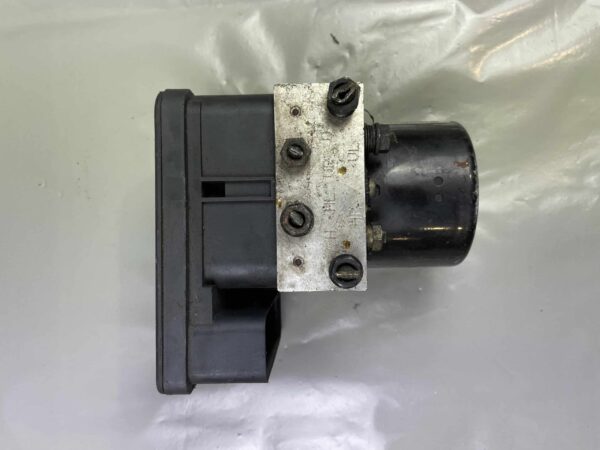


Mercedes W124 E-Class Cruise Control Module Wiring Fault Traced
The cruise control system on the Mercedes W124 uses a separate electronic control module to manage speed regulation through a vacuum actuator, brake cutoff switch, clutch switch on manual gearbox variants, and stalk commands from the steering column. When cruise control stops working on a W124, the module is a genuine suspect — but only after the wiring, switches and vacuum circuit have been eliminated. A faulty module typically causes complete cruise non-function or random disengagement at speed, sometimes with no fault codes stored at all.
How the W124 Cruise Control System Works
Unlike modern vehicles where cruise is integrated into the engine ECU, the W124 uses a standalone cruise control module — usually mounted behind the dashboard or in the engine compartment depending on the production year and market. The module receives a vehicle speed signal from the instrument cluster or ABS, reads switch states from the stalk, monitors the brake light switch to cut engagement when the driver brakes, and drives a vacuum servo to hold throttle position. The system is relatively simple but has many individual components that can fail independently of the module itself.
The vacuum actuator is a common weak point on high-mileage W124 engines. A cracked diaphragm causes cruise to set momentarily and then drop. This is frequently misdiagnosed as a module fault. Before touching the module, physically inspect the vacuum servo and check that it holds vacuum with a hand pump.
Symptoms That Point Toward the Module
- Cruise control will not set at all — stalk operates but nothing engages
- System sets but disengages within seconds without braking
- Resume function works but Set does not, or vice versa
- Cruise engages but vehicle speed drifts rather than holding steady
- Complete loss of function after electrical work or battery replacement
A module-specific fault usually means the system genuinely does not respond to stalk inputs rather than disengaging erratically. Erratic disengagement more commonly points to the brake switch, clutch switch or a vacuum leak. True module failure tends to produce a dead system. For comparison, see How the Mercedes W124 EZL Ignition Control Module Causes Misfires.
Diagnostic Steps Before Replacing the Module
Start with the brake cutoff switch above the brake pedal. On W124 vehicles, this switch is prone to maladjustment and internal wear. A switch that reads as permanently activated will prevent cruise from engaging. Check it with a multimeter — it should be open at rest and close when the pedal is depressed. If it reads closed at rest, adjust or replace it.
Next, check the fuse. The W124 cruise control system is protected by a dedicated fuse in the interior fusebox. On most W124 variants this is fuse 13 or 14 depending on the production year — confirm this against the fusebox lid diagram for that specific vehicle. A blown fuse with no obvious cause can indicate a wiring short that will destroy a replacement module if left unresolved.
Inspect the wiring harness at the module connector. W124 vehicles of this age commonly suffer from brittle insulation, corroded terminals and broken wires where the harness bends near the firewall. A broken speed signal wire will prevent the module from reading vehicle speed, causing complete non-function that looks exactly like a dead module.
If the vacuum circuit, switches, fuse and wiring all check out, the module itself becomes the primary suspect.
Relevant Fault Codes
The W124 cruise control module does not communicate on a CAN network. It is a standalone unit and does not generate storable fault codes in the modern sense. Diagnosis is done through switch-state testing and by checking input signals at the module connector with the ignition on. Some specialist testers can communicate with the module directly via a serial diagnostic line on late W124 variants equipped with the DI diagnostic interface.
| Signal | Expected State | Failure Indication |
|---|---|---|
| Speed signal input | Pulsing at road speed | No pulse = cluster or wiring fault |
| Brake switch signal | High when pedal released | Constant low = cruise will not set |
| Stalk Set input | Ground when pressed | No ground = stalk or wiring |
| Vacuum actuator output | Voltage when engaged | No voltage = module output failure |
OEM Part Numbers for the W124 Cruise Control Module
The correct module number depends on the engine and gearbox combination. W124 vehicles were built with carbureted, fuel-injected and diesel engines across multiple markets, and the cruise control module varies accordingly. When sourcing a replacement, match the part number exactly — even a module from the same vehicle line may have different calibration if the engine code differs. A related diagnostic guide is How the Mercedes W124 Instrument Cluster Loses Its Display.
- 000 545 18 32 — 4-cylinder petrol engines, early production
- 000 545 19 32 — 6-cylinder petrol engines, M103/M104
- 000 545 22 32 — 300D and 300TD turbodiesel variants
- 000 545 28 32 — late production W124 with updated electronics
- 002 545 04 32 — E320 and E280 post-facelift applications
These numbers are production references. Always verify the number printed on the original module before ordering a replacement, as running changes during production sometimes mean vehicles carry later-spec modules from earlier in the production run.
Affected Vehicles
The Mercedes W124 was produced from 1984 to 1995 and offered in saloon, estate, coupé and cabriolet body styles. Cruise control was optional on most markets and standard on some higher-specification trim levels. The 200E, 230E, 260E, 300E, 300CE, E220, E280 and E320 petrol variants are the most commonly affected. Diesel variants including the 300D and 300TD use a separate cruise module variant. The system architecture described here applies to the final W124 production years from 1990 to 1995, which are the most likely to still be in regular use.
Using a Tested OEM Replacement Module
The W124 cruise control module does not require coding or programming. A correctly matched used OEM unit can be installed directly and the system should function without any adaptation procedure. This makes sourcing a tested used module a practical and cost-effective option compared to purchasing new where availability for this generation is increasingly limited. Ensure the replacement module matches the original part number and comes from a vehicle with a compatible engine type.
Frequently Asked Questions
Why does the W124 cruise control disengage immediately after setting?
Immediate disengagement almost always points to the brake light switch being out of adjustment or faulty, a clutch switch issue on manual gearbox cars, or a vacuum leak in the actuator diaphragm. The module itself rarely causes this specific symptom. Check those components before testing the module. For additional context, read What Happens When the Mercedes W124 EGS Transmission Module Fails.
Does replacing the W124 cruise control module require coding?
No. The W124 cruise control module is a standalone unit with no CAN integration and no coding requirement. Install the correctly matched OEM unit and the system will function immediately without any programming procedure.
Can a faulty cruise control module cause any other electrical problems on the W124?
A failed W124 cruise module does not typically affect other vehicle systems since it is not networked. However, a module with an internal short can blow its fuse and potentially stress wiring in the cruise circuit. This is rare but worth checking if the fuse has blown repeatedly.
What speed signal does the W124 cruise module use?
The W124 cruise module typically receives its speed signal from the instrument cluster, which itself takes input from the transmission output speed sensor or the ABS wheel speed system depending on the variant. A faulty speedometer or broken signal wire between the cluster and the cruise module will cause cruise to refuse to set.
Is it worth repairing a W124 cruise control module rather than replacing it?
Component-level repair is possible but rarely practical for this module given the age and complexity of the internal circuitry. A tested used OEM module from a matching W124 variant is usually the most reliable and cost-effective solution. Confirm the module part number matches before purchasing.
Find tested OEM electronic parts and modules at:
https://giantparts.eu/