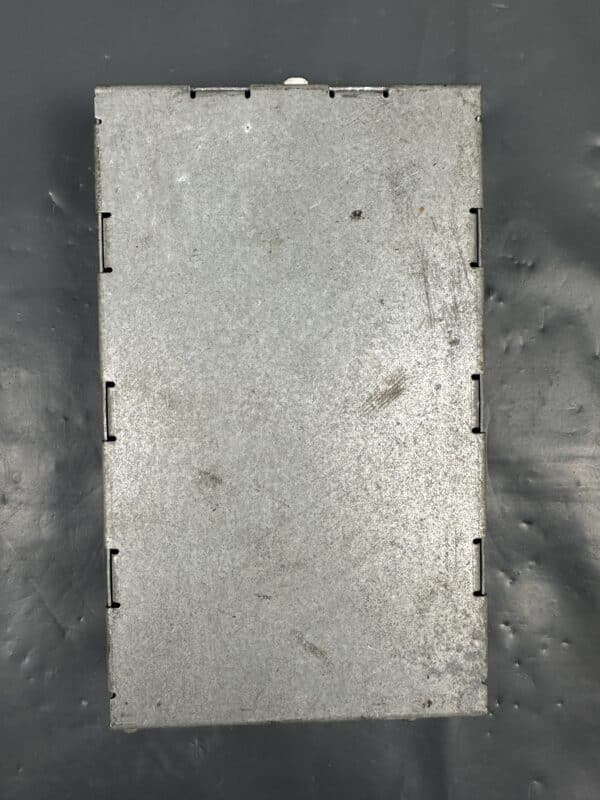


What Happens When the BMW E38 7-Series Steering Angle Sensor Fails
The steering angle sensor in the BMW E38 7-Series sits on the steering column and continuously feeds the DSC (Dynamic Stability Control) module with data about which direction the driver is steering. When this sensor fails or loses calibration, the DSC system cannot correctly interpret cornering inputs, and stability control either disengages entirely or behaves erratically. The DSC and ABS warning lamps typically illuminate simultaneously, because both systems share the same data bus for this signal.
How the Steering Angle Sensor Works in the E38
BMW introduced DSC on the E38 in the mid-1990s as an optional then standard feature on later models. The steering angle sensor is not a standalone controller — it is part of the signal chain that the DSC control unit relies upon alongside wheel-speed sensors and yaw-rate sensors. It uses a rotary encoder principle, measuring steering wheel position across multiple turns, and communicates via the CAN bus to the DSC module.
If the sensor drifts out of its zero-point calibration — for instance after a battery disconnect or wheel-alignment work — it can report the wrong centre position. This alone triggers a DSC fault even without any mechanical damage to the sensor itself. A genuine hardware failure is different: the sensor stops producing a coherent signal, and the DSC module immediately registers a communication or plausibility error.
Symptoms That Point to a Steering Angle Sensor Problem
- DSC warning light permanently on, sometimes alongside the ABS lamp
- Stability control disengages and cannot be re-enabled from the dashboard switch
- Fault codes stored in the DSC control unit related to steering angle signal
- Occasional or intermittent DSC intervention at straight-line speeds where no intervention should occur
- DSC warning light that clears temporarily after a battery reset but returns within a short drive
It is worth noting that these symptoms overlap with yaw-rate sensor faults, wheel-speed sensor faults and DSC module faults. The steering angle sensor should be one item in a broader diagnostic sequence, not an automatic first assumption. For comparison, see BMW E38 7-Series Instrument Cluster Failure: Common Faults and Repair Guide.
Fault Codes Associated With This Fault
Codes stored in the DSC control unit on the E38 will vary depending on the exact DSC variant fitted (Bosch DSC III or DSC 5.7 depending on model year). Codes commonly seen include:
| Code | Description |
|---|---|
| 5E12 | Steering angle sensor — signal implausible |
| 5E13 | Steering angle sensor — no signal / communication fault |
| 5E14 | Steering angle sensor — calibration not performed or lost |
| 5E20 | DSC — steering angle sensor zero-point not set |
| 5DF0 | DSC — multiple sensor plausibility fault (can involve steering angle sensor) |
If you see 5E14 or 5E20 in isolation after a battery disconnect or steering work, the sensor itself may be fine — it simply needs a new zero-point calibration performed with a capable scan tool such as ISTA or compatible BMW diagnostics software.
Relevant OEM Part Numbers for the E38
The steering angle sensor on the E38 was supplied primarily by Bosch. Part numbers depend on the DSC generation and model year. The following numbers are relevant to the E38 platform:
- BMW OEM: 32306774837 — steering angle sensor, E38 late models with DSC
- BMW OEM: 32306764526 — earlier E38 application
- Bosch reference: 0 265 005 249
- Bosch reference: 0 265 005 279
- BMW OEM: 34526756379 — used on some E38 variants in conjunction with DSC module pairing
Always cross-reference against the vehicle’s DSC system version and build date before ordering. The E38 received mid-cycle updates, and the sensor used on a 1995 model differs from what is fitted to a 2001 model. Matching the correct OEM number matters because a sensor from a different generation may physically fit but report an incompatible signal to the DSC module. A related diagnostic guide is BMW E38 7-Series DSC Control Module Faults Diagnosis and Repair.
Diagnosis Before Replacement
The most useful diagnostic sequence is straightforward but must be followed in order. First, read all fault codes from the DSC module and note whether the fault is intermittent or permanent. Second, check whether a simple calibration reset resolves the issue — on many E38 cases with code 5E14, this is all that is needed. Third, if the signal fault persists after calibration, use live data in a scan tool to observe the steering angle sensor output while turning the wheel slowly from lock to lock. A healthy sensor produces a smooth, consistent value. A failing sensor either flatlines, jumps erratically or produces a reading that does not match actual steering movement.
If live data confirms the sensor is producing bad output, replacement is the correct path. There is no serviceable internal component in the sensor itself.
Affected Vehicles
The E38 was produced from 1994 to 2001. DSC was introduced as an option on the 735i and 740i from approximately 1997 and became more widely fitted on later models. Earlier E38 vehicles without factory DSC do not use this sensor in the same way. Engine variants fitted with DSC across the range include the 728i, 735i, 740i, 740iL and V12 750i and 750iL. The sensor location and mounting remain consistent across DSC-equipped variants, but the part number must be verified against the actual DSC control unit fitted.
Frequently Asked Questions
Can the BMW E38 steering angle sensor cause the car to fail its MOT or roadworthiness test?
In most European markets, a permanently illuminated ABS or DSC warning light is a direct MOT or technical inspection failure. If the steering angle sensor fault has triggered the warning lamp, the car will not pass until the fault is resolved. A calibration reset that clears the light may provide a temporary solution, but if the sensor hardware is failing the light will return.
Does the replacement steering angle sensor on the E38 need coding?
The steering angle sensor itself does not require VIN coding or module pairing in the same way as an ECU or instrument cluster. However, after fitting a replacement sensor, a zero-point calibration must always be performed using BMW diagnostic software. Without this step, the DSC system will not accept the sensor output as valid and will continue logging faults. For additional context, read BMW E38 7-Series DME Engine Control Module Faults Diagnosis Guide.
Is it safe to drive the E38 with a faulty steering angle sensor?
The car remains driveable in most cases because the engine management and braking systems continue to function independently. However, DSC stability control will be inactive, which removes a meaningful safety system in low-grip conditions. Driving with a known sensor fault in winter or on wet roads significantly reduces the vehicle’s active safety capability.
Can a used OEM steering angle sensor from another E38 be fitted?
Yes, a used OEM sensor from a compatible E38 is a practical and cost-effective solution provided the part number matches your vehicle’s DSC system generation. After fitting, the zero-point calibration procedure must still be carried out. GiantParts supplies tested used OEM sensors for the E38 platform — find suitable parts at giantparts.eu.
What other faults can be confused with a steering angle sensor failure on the E38?
The yaw-rate sensor, lateral acceleration sensor and individual wheel-speed sensors all contribute to DSC operation and can produce overlapping warning lights and similar fault codes. A thorough live-data check through BMW diagnostics separates these faults. Do not replace the steering angle sensor without first confirming through live data that the sensor signal is genuinely out of specification.
Find tested OEM electronic parts and modules at: https://giantparts.eu/
Related diagnostic guides and OEM parts
- BMW E38 7-Series CAS Ignition Module Faults Diagnosis and Repair
- BMW E38 7-Series ABS Control Module Failure Symptoms and Repair
Related available product: 1094143 BMW E39 E38 E53 Steering Angle Sensor – Used & Tested
Browse the category: Steering Angle Sensors, Clock Springs & Column Modules