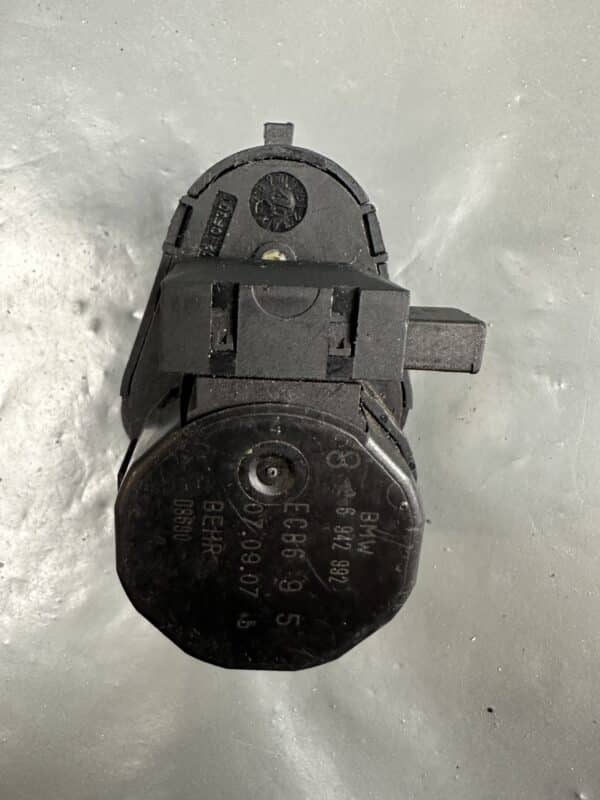


Mercedes W164 ML-Class Transmission Control Unit Common Faults
The Mercedes W164 ML-Class transmission control unit (TCU) — also called the EGS module — manages the 7G-Tronic automatic gearbox and is a known weak point on these vehicles built between 2005 and 2011. When it fails, the gearbox can become erratic, stuck in limp mode or completely unresponsive, and in most cases the fault is electronic rather than mechanical.
What Does the W164 TCU Actually Do?
The EGS (Elektronisches Getriebesteuergerät) unit on the W164 controls shift timing, torque converter lock-up, gear selection logic and communicates continuously with the engine ECU and ESP module over CAN bus. It reads input from multiple sensors — output shaft speed, selector position, temperature — and adjusts hydraulic solenoids inside the transmission valve body accordingly. A corrupted or damaged TCU upsets this entire chain.
Common Symptoms of W164 TCU Failure
- Gearbox stuck in 2nd or 3rd gear (limp-home mode) with no warning, especially after a cold start
- Harsh or delayed shifts between gears, particularly 1–2 and 2–3 under load
- No engagement when selecting D or R from P — engine revs but the car doesn’t move
- Transmission warning light on dash, sometimes accompanied by the ESP warning
- Erratic kickdown behaviour — either no response or a sudden uncontrolled downshift
- CAN bus communication errors appearing alongside gearbox codes
- Car drives normally when cold but develops faults once the transmission reaches operating temperature
The temperature-related pattern is a strong clue. It often points to solder joint fatigue on the TCU board or a failing voltage regulator inside the module rather than a worn gearbox component. For comparison, see Mercedes W164 ML-Class Transmission Control Unit Faults Guide.
Common Error Codes
| Fault Code | Meaning |
|---|---|
| P0700 | Transmission control system malfunction — general TCU fault signal |
| P0720 | Output shaft speed sensor circuit fault |
| P0741 | Torque converter clutch solenoid — stuck off or open circuit |
| P0750 | Shift solenoid A malfunction |
| P2714 | Pressure control solenoid D — stuck open |
| C1010 | CAN communication fault between EGS and ESP module |
| C249F | Transmission control module — internal fault or checksum error |
Always read codes with a Mercedes-capable scanner (XENTRY/DAS or equivalent). A generic OBD2 reader will often show only P0700 and miss the specific EGS internal codes that point you directly to the module.
Root Causes Behind TCU Failure
On the W164, the TCU sits in an exposed position in the engine bay, and moisture ingress around the connector seals is a regular culprit. Once water gets into the multi-pin connector, corrosion builds up on the terminals and resistance increases to the point where sensor signals are corrupted. The module misreads shaft speeds or solenoid feedback and goes into protection mode.
Overheating is another factor — the 7G-Tronic runs hot by design, and if the transmission cooler is partially blocked or the ATF hasn’t been changed in 80,000+ km, thermal stress accelerates component ageing inside the TCU. Internal capacitor failure and cracked solder joints on the processor board are the most common end-stage faults seen when the module is opened.
Affected Vehicles
- Mercedes W164 ML 280 CDI, ML 300, ML 320 CDI, ML 350, ML 420 CDI, ML 500 (2005–2011)
- Mercedes W164 ML 63 AMG (2006–2011)
- Mercedes W251 R-Class (2005–2012) — shares the same 7G-Tronic TCU platform
- Mercedes W164 GL 320/350/420/450/500 (X164 chassis) — identical EGS unit
Common OEM Part Numbers
These are genuine OEM references for the W164 EGS/TCU. Always cross-reference the 10-digit part number stamped on your existing unit before ordering — the correct module depends on engine variant and build date.
- A 164 446 09 91 — EGS control unit, ML 320 CDI / ML 350 CDI
- A 164 446 03 91 — EGS unit, ML 500 petrol variants
- A 164 446 05 91 — EGS unit, ML 420 CDI / GL 420 CDI
- A 164 446 07 91 — later production update, suits multiple diesel variants
- A 164 446 02 91 — ML 280 CDI, early build 2005–2007
Repair or Replace — What Makes Sense?
Board-level repair of the W164 TCU is possible if the fault is isolated — a specialist can reflow solder joints or replace failed capacitors. But this only makes economic sense if the rest of the module is in good condition. If there’s corrosion on the internal board or a failed processor, replacement is the more reliable outcome. A related diagnostic guide is Mercedes W164 ML-Class ECU Engine Control Module Faults Guide.
A tested used OEM unit from a low-mileage donor vehicle is the most cost-effective path for most owners. The critical step is matching the software version and having the replacement coded to the vehicle with XENTRY — a direct plug-in swap without coding will not work and may leave the transmission non-functional.
Frequently Asked Questions
Can I drive my W164 ML with the gearbox in limp mode?
Short distances only, and carefully. Limp mode typically locks the gearbox in a single gear to prevent further damage, so motorway speeds are not safe and sustained driving in this state can overheat the transmission fluid. Get it diagnosed as soon as possible — the TCU fault itself does not usually mean the gearbox internals are damaged, but ignoring it risks secondary problems.
Does the replacement W164 TCU need coding?
Yes, always. The EGS module on the 7G-Tronic must be programmed with the correct software version and paired to the vehicle via XENTRY or equivalent Mercedes diagnostic software. An uncoded replacement unit will not communicate correctly with the engine ECU and will generate immediate fault codes or leave the vehicle immobilised.
How do I tell if the fault is in the TCU or the valve body?
The key diagnostic step is pulling EGS-specific fault codes — internal module faults like C249F or checksum errors point to the TCU itself. Solenoid-related codes like P0750 or P2714 can indicate either a failed solenoid inside the valve body or a TCU that can no longer drive the solenoid correctly. A resistance test at the TCU connector pins will usually distinguish the two. If the solenoid coil resistance is within spec but the code persists, the TCU is the likely culprit. For additional context, read Mercedes W164 ML-Class SAM Module Faults: Common Failures and Repair.
Is the W164 TCU the same as the R-Class W251 unit?
In many cases, yes — both platforms use the same 7G-Tronic gearbox family and share compatible EGS modules depending on engine variant and build date. However, always verify by comparing the full OEM part number on the existing unit. A mismatch in software revision between platforms can cause calibration issues even if the module physically fits.
What is a realistic cost for a tested used W164 TCU?
A tested used OEM EGS unit for the W164 typically ranges from €180 to €350 depending on variant and mileage of the donor vehicle. That compares very favourably with a new OEM unit at €800–1,200+, and with a remanufactured unit that may not include the latest software revision. The essential factor is buying from a supplier who tests the module electrically before shipping and provides part number verification.
Finding a Reliable Replacement
When sourcing a W164 TCU replacement, insist on the full OEM part number, mileage documentation from the donor vehicle, and confirmation that the unit has been bench-tested. Aftermarket alternatives are not recommended for this application — the 7G-Tronic is sensitive to calibration and an untested unit creates unnecessary risk of further gearbox damage.
Find tested OEM electronic parts and modules at:
https://giantparts.eu/
Related diagnostic guides and OEM parts
- Mercedes W164 ML-Class Instrument Cluster Faults Common Failures Guide
- Mercedes W164 ML-Class ABS Control Module Failure Diagnosis Guide
Browse the category: Automatic Transmission ECU & TCM Modules