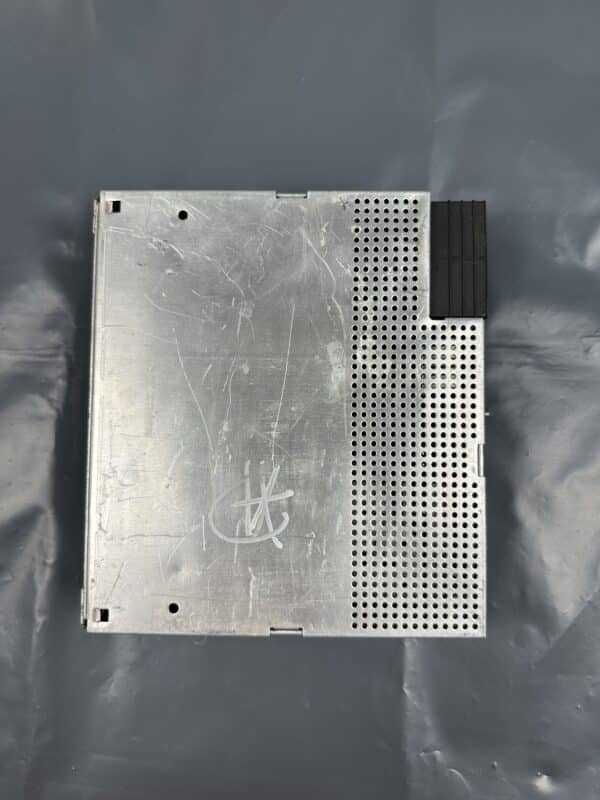


Tracking Down an Intermittent Fault in the Opel Astra H BCM
The Body Control Module in the Opel Astra H (2004–2010) manages central locking, interior lighting, wiper logic, window operation and several other convenience systems. When it develops a fault, the symptoms are rarely consistent — locking works one day and fails the next, interior lights stay on randomly, or warning indicators appear without any clear cause. Because the failures come and go, the BCM is often overlooked until the problem becomes impossible to ignore.
Why Intermittent Faults Make BCM Diagnosis Difficult
Intermittent faults are the hardest type to pin down on any vehicle, and the Astra H BCM produces more than its share of them. The module handles a large number of low-current inputs and outputs, meaning even slightly corroded connector pins or marginal solder joints inside the unit can cause unreliable operation without triggering a permanent fault code. The ECU may log a fault briefly, clear it during the next ignition cycle, and leave no trace for a standard scan.
This is important to understand before condemning the BCM. A clean fault code memory does not mean the BCM is healthy. On the Astra H, technicians experienced with these cars often use live data logging over an extended drive cycle to catch the module behaving incorrectly in real time, rather than relying on a single snapshot scan. For comparison, see When the Opel Vectra C Throttle Control Module Triggers Limp Mode.
Common Symptoms Associated With the Astra H BCM
- Central locking operates from one door handle but not the other
- Remote key fob works intermittently despite fresh battery
- Interior cabin lights stay on after doors are closed
- Electric windows respond slowly or stop mid-travel
- Windscreen wipers activate at wrong speeds or fail to park correctly
- Service or electrical warning lamp appears and disappears
- Battery drain overnight without an obvious draw source
- Immobilizer LED flashing when no fault is present
Not every symptom means the BCM has failed internally. Wiring connectors on Astra H models are prone to moisture ingress at the door sill and A-pillar entry points. Before replacing the module, inspect the main BCM connector — typically a large multi-pin block located behind the dashboard near the fusebox — for corrosion, pushed-back pins or water marks.
Relevant Fault Codes on the Opel Astra H
The following codes can appear in the BCM memory when using a compatible scan tool such as Tech2, OP-COM or a professional OBD-II reader with Vauxhall/Opel extended diagnostics:
| Fault Code | Description |
|---|---|
| B1009 | Control module configuration mismatch or internal fault |
| B2510 | Battery voltage supply to BCM low or intermittent |
| B3031 | Central locking output circuit fault |
| B1325 | Loss of communication with BCM on UART bus |
| U2100 | Loss of communication — body systems network |
| B0083 | Door lock actuator circuit — open or short |
Codes U2100 and B1325 in particular often point to the BCM either dropping off the vehicle network intermittently or losing its supply voltage momentarily. Check the earth connections at the BCM mounting point and the main body earth strap before assuming the module itself is defective.
OEM Part Numbers for the Astra H BCM
The Astra H BCM is vehicle-specific. Variants differ depending on the equipment level (manual or automatic transmission, diesel or petrol, presence of cruise control, alarm system) and the production year. Using the wrong variant typically results in missing functions or the module refusing to accept the vehicle VIN during programming.
Commonly referenced OEM numbers include:
- 13206975
- 13140535
- 13222384
- 13220542
- 13258448
Always cross-reference the number printed on your original module before ordering a replacement. A used OEM BCM from a matching Astra H variant is a practical solution, but it must be programmed to your vehicle using Tech2 or equivalent software. The module stores the VIN and is not plug-and-play without reprogramming. A related diagnostic guide is VW Passat B6 SAM Comfort Module Faults Diagnosis and Repair Guide.
Affected Vehicles and Production Periods
The Astra H platform was produced from 2004 to 2010 in hatchback, estate (Caravan) and GTC body styles. The BCM architecture is shared across the range, though diesel variants with additional glow plug logic and models fitted with the factory alarm system use different BCM variants. Vehicles built between 2004 and 2007 are statistically more prone to connector corrosion issues. Later production cars (2008–2010) tend to show more internal module faults related to component ageing.
The Astra H platform is also shared with the Zafira B (2005–2011), which uses a closely related BCM. In some cases the part numbers overlap, but this should be verified carefully against the exact vehicle and equipment specification.
Frequently Asked Questions
Can the Astra H BCM cause the battery to drain overnight?
Yes. A BCM that fails to enter sleep mode correctly will keep low-current circuits active indefinitely, drawing 50–200 mA constantly. This is enough to flatten a healthy battery within one to two days. To check, use a clamp meter in series with the negative battery terminal after the vehicle has been locked for 20 minutes. A normal quiescent current should fall below 30 mA on the Astra H. Anything above that warrants further investigation into which module is staying active.
Does a replacement BCM need to be coded or programmed?
Yes, always. The Astra H BCM stores the vehicle identification number and is linked to the immobilizer system. A used OEM module from an identical variant must be reprogrammed using Tech2 or a compatible tool that supports Opel/Vauxhall TIS2WEB functions. Without programming, central locking, windows and several other systems will not operate correctly, and the immobilizer may prevent starting. For additional context, read VW Passat B6 Central Locking Comfort Module Failure Guide.
Can I clean or repair the BCM connector instead of replacing the module?
In many cases, yes. If the fault codes point to supply voltage issues or if there is visible corrosion on the connector pins, carefully cleaning the connector with electrical contact cleaner and re-seating it often resolves intermittent behaviour. Use dielectric grease on the pins after cleaning. However, if the module has internal solder joint failure or a damaged microprocessor, connector cleaning will not help and replacement is necessary.
How do I tell whether the BCM fault is actually a wiring problem?
Disconnect the BCM connector and inspect each pin cavity for moisture, greenish corrosion or deformed pins. Use a multimeter to confirm that the supply voltage and earth circuits at the connector reach correct values before blaming the module. If voltage and earths are good and the module still logs communication faults or produces intermittent outputs, the module itself is the likely cause.
Is a used OEM Astra H BCM safe to install?
A tested used OEM BCM from a matching Astra H variant is a reliable and cost-effective solution. The key requirement is that the donor vehicle matches in body style, engine type, equipment level and production year closely enough that the part number corresponds. Once programmed to your vehicle, a used OEM module performs identically to a new unit. Avoid generic aftermarket alternatives, which frequently lack the full Opel-specific software calibration and can introduce new faults.
Find tested OEM electronic parts and modules at:
https://giantparts.eu/
Related diagnostic guides and OEM parts
- Mercedes W203 C-Class SAM Module Faults: Common Failures and Repair Guide
- VW Passat B5 Central Comfort Module Failure: Common Faults Guide
Browse the category: Body Control BCM, SAM & Comfort Modules